What “turnkey” means at SWINEGEAR
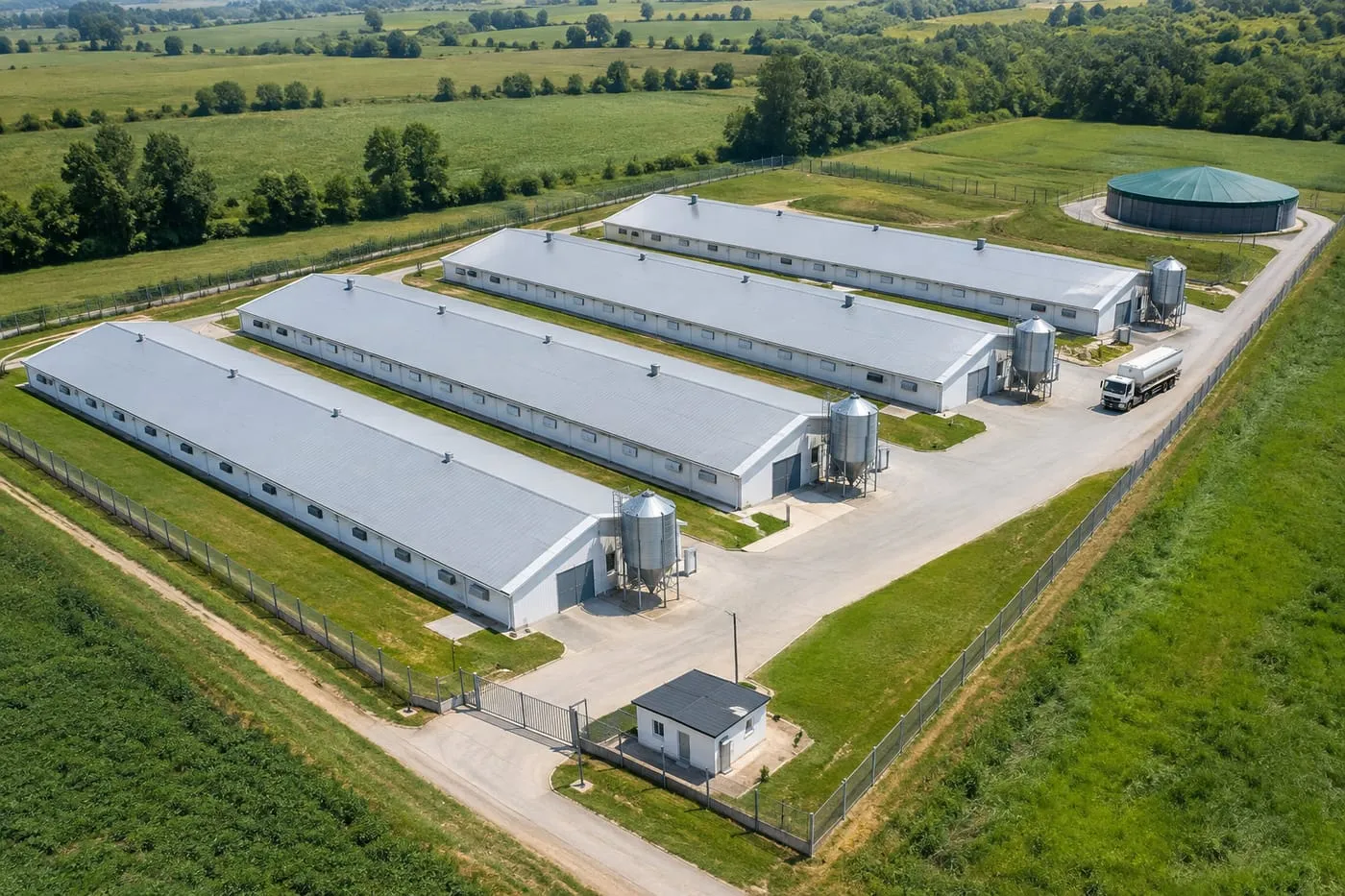
A turnkey project puts the whole farm in one pair of hands: planning, house design, equipment, installation, commissioning and training. You deal with one team that answers for how the parts fit together, instead of matching drawings and delivery dates from several suppliers.
SWINEGEAR has made pig farming equipment since 2000, with more than 500 employees and over 50 installation specialists. The same people who build the equipment plan the site and put it into operation.
The seven stages of a project
| Stage | What happens | What you receive |
|---|---|---|
| 1. Site selection and evaluation | We review candidate sites, access, water, power and a first feasibility view | Site assessment and a recommendation |
| 2. Project planning | Herd size, production flow, number of places per stage, building phases | Master plan and phase plan |
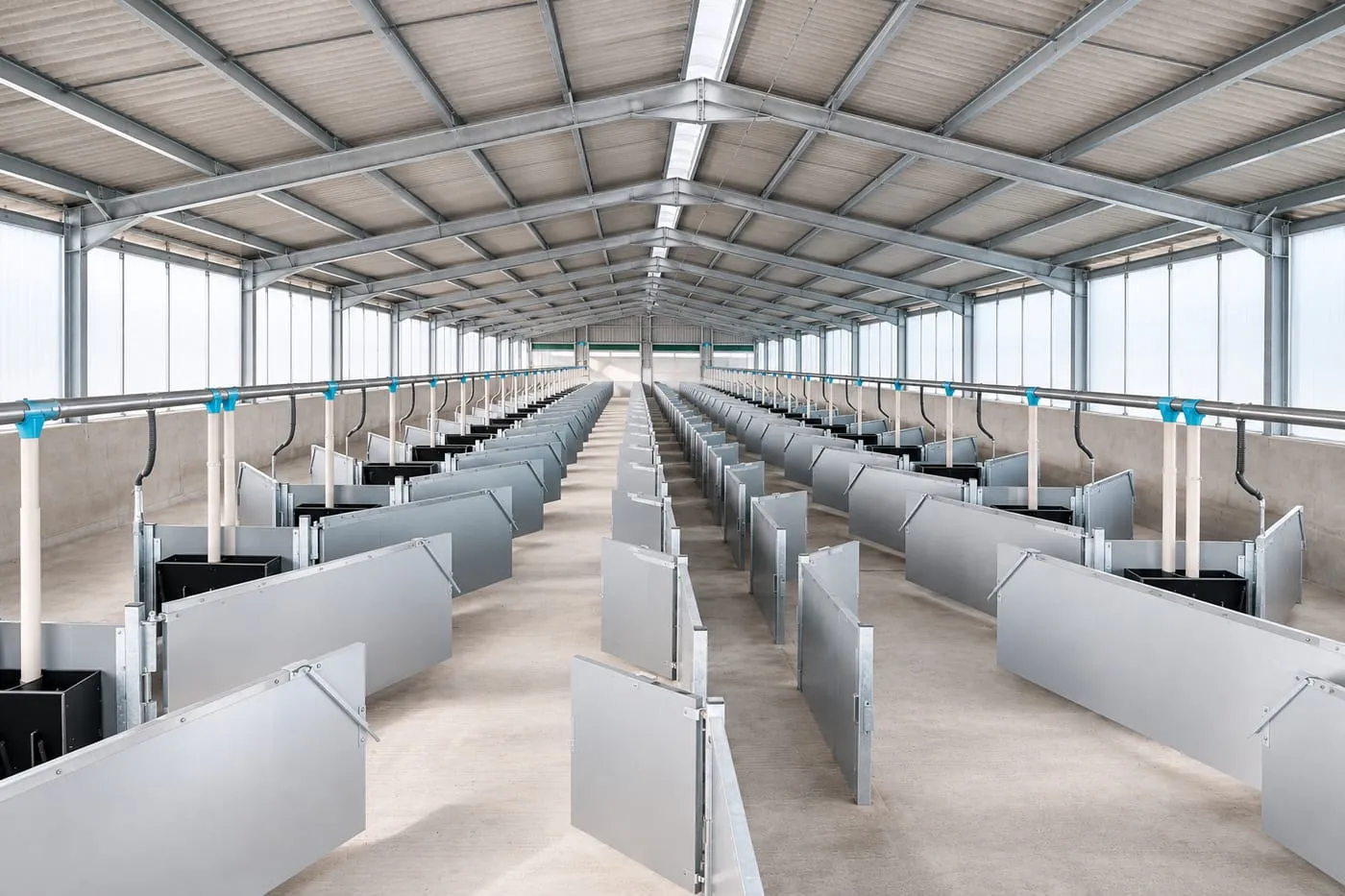
| 3. Engineering design | Houses, pens, feeding, ventilation, manure and utilities designed together | Layout drawings and equipment lists |
| 4. Manufacturing and supply | Equipment made and checked in our factory | Confirmed supply list and shipping plan |
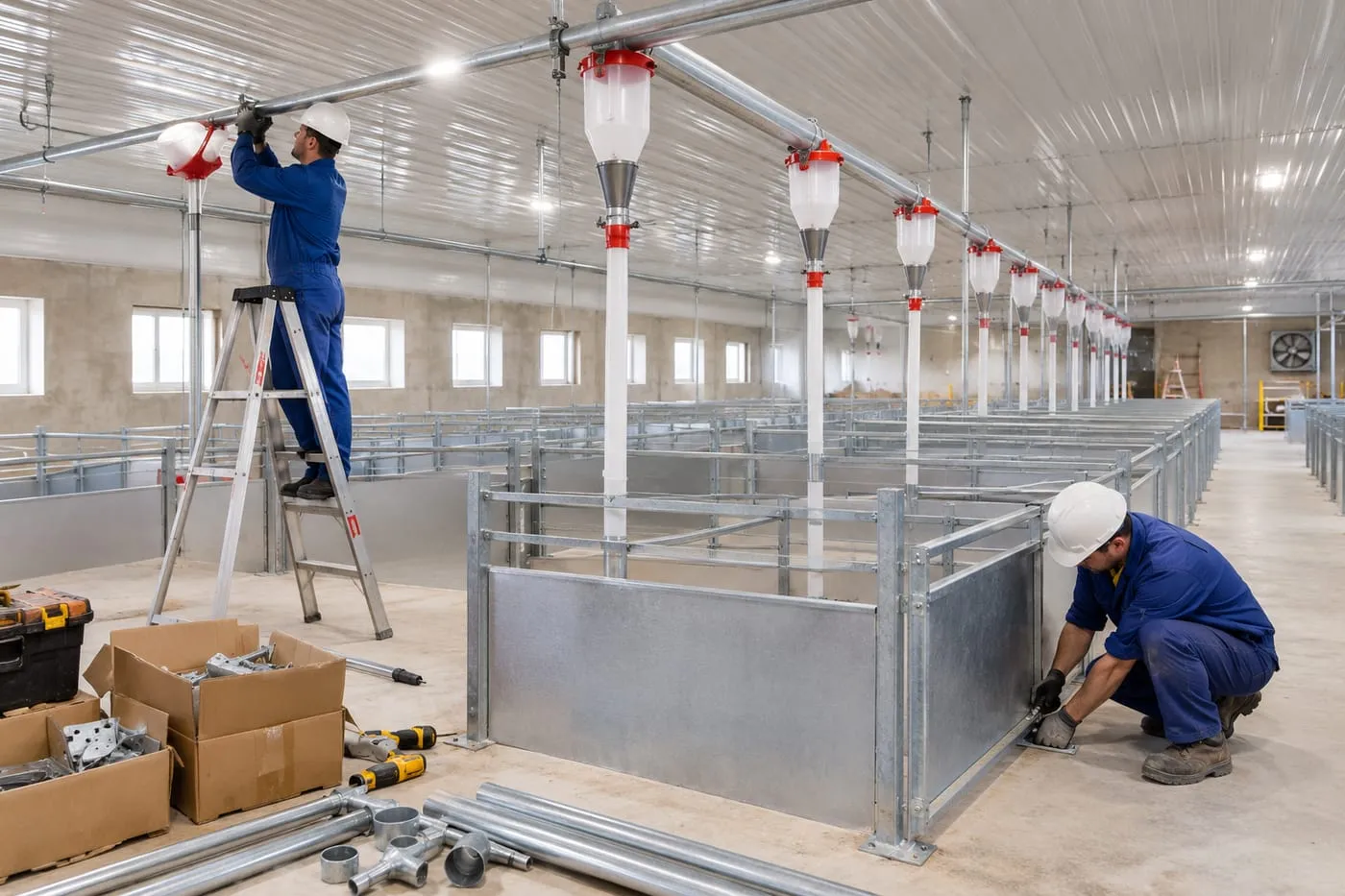
| 5. Installation and commissioning | Our installers set up, test each machine, then test systems together, including alarms | Test records and a closed issue list |
| 6. Training | Operation, cleaning and daily routines for your staff | Training records and manuals |
| 7. After-sales service | Spare parts, maintenance guidance and technical support | Spare parts list and service channels |
What we need from you
These questions shape the design. Nothing has to be final at the start — but every answer makes the first proposal more precise.
- Location — country, region and site; it decides climate design, logistics and local rules.
- Production model — farrow-to-finish, piglet production, nursery-finishing, finishing only or renovation.
- Herd size — sow places, the age at which piglets are sold, or yearly output.
- Site — boundaries, size, levels, roads and existing buildings, ideally with a survey drawing.
- Climate — temperature and humidity range, rainfall, wind and extreme weather.
- Water and power — water source and test report, pressure, voltage, frequency, available capacity and outages.
- Feed — bought-in or own feed, ingredients and feed form.
- Housing preferences — stalls or group housing, farrowing system, feeding method.
- Manure route — field use, transport off site or treatment.
- Data and automation — how much automation your staff can run and maintain.
- Project boundaries — who designs, builds, installs, commissions, trains and services each part.
- Phases, schedule and budget basis — building phases, start of production, currency, and whether freight, taxes and site work are included.
- Local requirements — design, environmental, fire, animal welfare and veterinary rules that need local review.
Scope is written down, system by system
Every turnkey project ends up as a contract with a clear list of what is supplied and what is done locally — for the site plan, the houses, pens and floors, feeding, water, climate, manure, biosecurity, data systems, utilities, installation and after-sales. Typical examples of items agreed locally are soil investigation, permits, foundations, temporary power and water during construction, and disposal services.
What is handed over at the end
- The confirmed supply list, equipment models and technical documents
- Interface drawings, installation and operating manuals
- Records of single-machine, combined, alarm and emergency tests
- The issue list with every item closed and signed off
- Training records for operation, cleaning and maintenance
- A spare parts and consumables list, with service contacts and responsibilities
Start with a conversation
Send us the country, the herd size you have in mind and what you already know about the site. An engineer will come back with questions and a first outline of the farm.